
2026 Best Commercial Vacuum Sealer Machine for Buyers

Choosing the 2026 best commercial vacuum sealer machine requires more than comparing prices or advertised pump strength. Buyers must examine sealing performance, chamber size, material quality, cleaning access, and daily production demands. A machine beside a busy prep table faces heat, moisture, crumbs, and repeated cycles. Small weaknesses become expensive delays.

Food-packaging specialist Dr. Joseph P. Kerry has emphasized, “Packaging must protect food while respecting product quality and process conditions.” That principle remains practical. A reliable commercial vacuum sealer machine should create consistent seals without crushing delicate berries, leaking liquid marinades, or overheating during continuous use. Chamber depth matters when sealing large cuts of meat, while adjustable vacuum time helps protect bread, pastries, and soft vegetables.

This guide reviews leading models for restaurants, butcher shops, catering companies, food processors, and serious small businesses. It considers pump capacity, seal-bar width, vacuum control, maintenance, warranty support, and long-term operating cost. Stainless-steel construction often handles demanding kitchens better, but it does not guarantee excellent engineering. A powerful pump can still disappoint if the lid gasket wears quickly.

Real purchasing decisions are rarely perfect. A compact model may save counter space yet limit bag size. A larger unit may improve productivity but require stronger electrical service and more cleaning time. Buyers should measure their workspace, record average bag dimensions, and estimate hourly sealing volume before ordering. This article aims to make that process clearer, while acknowledging that one machine cannot fit every operation.
2026 Best Commercial Vacuum Sealer Machine for Buyers

Commercial Vacuum Sealer Machine Basics and Buying Purposes

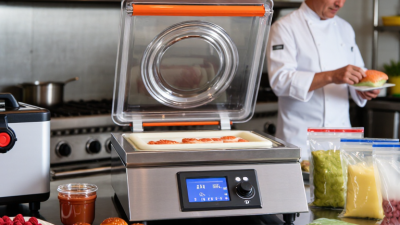
Commercial vacuum sealers remove air from a pouch, then create a controlled heat seal. Chamber models usually handle liquids and multiple bags more consistently than external suction units. Buyers should examine pump strength, seal width, chamber size, cycle time, and cleaning access.

The purpose is practical: portion meat, protect prepared meals, reduce freezer burn, and organize high-volume production. Vacuum sealing does not sterilize food or replace temperature control. The Food and Agriculture Organization estimates that 13.2% of food is lost between harvest and retail. Better packaging can reduce avoidable loss, but only when handling remains disciplined. The 2024 UNEP Food Waste Index reports 1.05 billion tonnes of food waste in 2022. That figure makes waste reduction a serious purchasing goal, not a marketing phrase.

In daily use, I would test a machine with wet vegetables, flat pouches, and uneven portions. A perfect seal on dry samples proves little. Small kitchens may value a compact chamber more than maximum pump speed. Production sites need repeatable cycles, removable sealing bars, and simple operator controls. Check gasket wear and spare-part availability before purchase. These details often matter more than advertised suction power.

A common buying mistake is choosing the largest model. It may consume more space, power, and cleaning time than necessary. Buyers should record hourly output, pouch dimensions, product moisture, and expected service conditions before comparing specifications. Data from the Packaging Machinery Manufacturers Institute also emphasizes automation, labor efficiency, and operational flexibility as continuing packaging priorities.

Key Features to Compare in 2026 Commercial Vacuum Sealers

Choosing a commercial vacuum sealer in 2026 requires more than comparing purchase prices. Grand View Research’s 2024 vacuum packaging analysis projects continued market growth through 2030, driven by food safety, shelf-life control, and operational efficiency. Buyers should examine pump capacity, chamber size, sealing-bar length, and cycle speed. These specifications directly affect throughput during busy production periods.

A practical test matters. Seal several pouches containing liquids, sharp-edged foods, and oily products. Watch for wrinkles, weak corners, or trapped air near the seal. A reliable machine should maintain stable vacuum pressure and produce consistent seals across repeated cycles. Oil-lubricated pumps usually support demanding workloads, while dry pumps can simplify maintenance. Stainless-steel construction, removable sealing bars, clear pressure controls, and accessible replacement parts also deserve attention. Short cycles help, but excessive speed may reduce seal quality.

Food safety cannot be separated from machine selection. The FDA Food Code identifies reduced-oxygen packaging as a controlled process requiring appropriate time and temperature management. Vacuum sealing does not make food shelf-stable. Operators still need documented cooling, refrigeration, cleaning, and storage procedures. I would request service records and run a one-hour endurance test before approving a purchase. A perfect specification sheet is not enough. I still distrust impressive speed claims without pouch-size and product-load details. Cost per cycle, energy use, seal failures, and operator training should appear in the final comparison.

2026 Best Commercial Vacuum Sealer Machine for Buyers - Key Features to Compare in 2026 Commercial Vacuum Sealers

Commercial Vacuum Sealer Comparison Guide
Sealer Class Recommended Use Chamber Size
(W × D × H)
Seal Bar Length Vacuum Level Typical Cycle Time Pump Type Electrical Input Suitable Bag Thickness Typical Duty Level Key Buying Consideration
Compact Single-Chamber Small restaurants, cafés, food trucks, and low-volume prep areas Approx. 280 × 330 × 70 mm 250–300 mm Up to approximately −0.9 bar 15–30 seconds Oil-lubricated rotary vane 700–1,000 W; single-phase 70–150 microns Up to approximately 50 cycles per day Low purchase cost, compact footprint, and simple controls
Standard Single-Chamber Retail food preparation, butcher shops, catering, and meal production Approx. 350 × 400 × 75 mm 300–400 mm Up to approximately −0.95 bar 20–40 seconds Oil-lubricated rotary vane 900–1,500 W; single-phase 70–180 microns Approximately 50–150 cycles per day A balanced choice for capacity, price, and product flexibility
Large Single-Chamber Commercial kitchens, processors, hotels, and larger batch operations Approx. 420 × 460 × 100 mm 400–500 mm Up to approximately −0.95 bar 25–50 seconds Oil-lubricated rotary vane 1,200–2,000 W; single-phase 80–200 microns Approximately 100–250 cycles per day Larger chamber volume and stronger sealing for heavy workloads
Double-Chamber High-throughput food processing, distribution, and production kitchens Approx. 500 × 600 × 100 mm per working area 400–600 mm Up to approximately −0.98 bar 20–45 seconds Oil-lubricated rotary vane 1,500–3,000 W; single- or three-phase 80–200 microns Approximately 200–500 cycles per day Two chambers allow loading and unloading while the other chamber operates
External Nozzle Sealer Large products, liquids in approved containers, and oversized bags No internal chamber; external work area 300–600 mm Typically up to approximately −0.85 bar 10–30 seconds Dry piston or rotary vane 300–1,000 W; single-phase 70–200 microns, depending on bag type Light to medium commercial use Useful for oversized items, but liquids require careful handling to protect the pump
Heavy-Duty Industrial Chamber Central production facilities, meat processing, and continuous batch packing Approx. 600 × 700 × 120 mm or larger 500–800 mm Up to approximately −0.98 bar 25–60 seconds High-capacity oil-lubricated rotary vane 2,000–5,000 W; single- or three-phase 100–250 microns More than 500 cycles per day when properly maintained Cooling, oil maintenance, service access, and electrical capacity are critical

Note: Specifications shown are representative commercial ranges for comparison. Actual performance depends on product temperature, bag material, bag size, loading method, seal settings, pump condition, and local electrical standards. A chamber vacuum sealer is generally better suited to liquids and wet foods than an external nozzle model because the entire bag is evacuated inside the chamber.

How to Choose the Right Sealer for Different Business Needs

2026 Best Commercial Vacuum Sealer Machine for Buyers

How to Choose the Right Sealer for Different Business Needs

Choosing a commercial vacuum sealer starts with your daily workload, not its appearance. A small café may need a compact external sealer for occasional portioning. A busy butcher shop usually benefits from a chamber model, which handles liquid-rich products more reliably. Measure your largest bags first. A narrow sealing bar can slow production and force awkward packaging. My first equipment comparison focused too much on motor power. I later found that sealing consistency, cleaning time, and operator training mattered more.

Tips: Match the machine to your products. Wet foods need controlled suction and a removable, easy-to-clean chamber. Dry goods may work well with an external sealer. Check the maximum bag width, seal temperature control, cycle time, and pump performance. Leave working space around the unit. Crowded counters create mistakes.

Think about the busiest hour, not the average hour. A restaurant preparing hundreds of portions needs durable controls and simple maintenance access. A small retailer may prefer lower energy use and easier storage. Stainless steel surfaces are practical, but they do not remove the need for daily cleaning. Ask about replacement seals, service support, electrical requirements, and operator safety instructions. Test sample bags before purchasing. One weak corner can spoil an otherwise good package. Some advice online sounds certain, but real products and workflows differ. Your own trial should make the final decision.

Operating Methods, Maintenance, and Food Safety Practices

2026 Best Commercial Vacuum Sealer Machine for Buyers

Operating a commercial vacuum sealer requires clean preparation and steady handling. Place the food inside a suitable bag, leaving enough space for the seal. Keep the opening flat and dry. Moisture near the sealing bar can create weak seams. Select a vacuum level that protects the product without crushing it. Soft bread, berries, and delicate pastries need gentler pressure. After sealing, check the seam for wrinkles, air pockets, or leaks. Label every package with the product name, packing date, and use-by date. Do not rely on memory.

Food safety continues after the machine stops. Refrigerate perishable food promptly at 4°C or below. Freeze items that will not be used soon. Vacuum packaging does not make unsafe food safe. It may also create low-oxygen conditions where certain bacteria can grow. Keep raw meat separate from ready-to-eat food, and sanitize work surfaces after each batch. Wash removable parts according to the equipment instructions. Wipe the chamber, sealing bar, lid gasket, and drip area daily. Inspect the gasket often. A small crack can reduce vacuum performance.

Tips: Chill food before sealing. Never seal warm food. Use a clean, correctly sized bag. Test one package before a large run. Record problems, even minor ones. Operators sometimes rush when production increases, and that is when careless handling begins. Review the process regularly, because a method that worked yesterday may need adjustment today.

2026 Best Commercial Vacuum Sealer Machine: Refrigerated Storage Guidance

These values show the recommended maximum refrigerator storage time at 40°F (4°C) or below for common food categories after vacuum sealing. Vacuum sealing helps reduce air exposure but does not make perishable food shelf-stable. Refrigerate promptly, keep the seal intact, and freeze food that will not be used within the recommended period.

Commercial Vacuum Sealer Costs, Brands, and Long-Term Value

2026 Best Commercial Vacuum Sealer Machine for Buyers

Commercial vacuum sealer costs vary widely, from about $1,000 for compact chamber units to over $10,000 for high-output systems. Prices depend on pump capacity, sealing-bar length, stainless-steel construction, and automation. Grand View Research reported steady growth in the global vacuum packaging market, supported by foodservice, retail, and prepared-food demand. This growth does not make every machine a good investment.

In daily operations, throughput matters more than the lowest purchase price. A small kitchen sealing 150 bags per day may need a 400–600 watt pump and a durable 12-inch bar. A central production room may require dual bars, faster cycles, and easier oil maintenance. PMMI industry reports repeatedly identify labor efficiency and equipment uptime as major packaging priorities. However, quoted savings can be optimistic. Electricity, replacement seals, oil, bags, cleaning time, and staff training quietly increase ownership costs. I have seen buyers compare only purchase prices. That is a costly blind spot.

Tips: Calculate cost per sealed bag over five years. Record cycle time, daily volume, rejected bags, and service expenses. Choose equipment with accessible parts and clear maintenance instructions. Vacuum packaging also requires proper refrigeration; it does not make food automatically safe. USDA food-safety guidance supports this caution. The best long-term value may be a slower machine with reliable sealing, not the fastest model on the showroom floor. Be willing to revise the estimate after thirty days of real use.