How to Choose a Commercial Food Vacuum Sealer in 2026?
Choosing a commercial food vacuum sealer in 2026 requires more than comparing motor power or advertised vacuum levels. The right machine should match your daily volume, food types, packaging materials, workspace, and cleaning routine. A small café may need a compact external sealer, while a central kitchen may require a stainless-steel chamber model with programmable cycles. The difference becomes obvious during a busy service: weak seals, wet bags, and overheated equipment quickly create waste.
Dr. Joseph Kerry, a respected food-packaging researcher, explains, “The package is part of the product.” That principle matters here. A reliable commercial food vacuum sealer should remove air consistently without crushing delicate berries, cooked pastries, or portioned fish. Look for adjustable vacuum time, strong sealing bars, replaceable gaskets, transparent controls, and easy access for sanitation checks. Chamber machines often handle liquids better, but they need more space and a higher purchase budget. External models can be faster for certain dry products, though their performance may decline with moisture.
Do not trust specifications alone. Test the machine with your actual bags, sauces, and portion sizes. Measure cycle time during peak production. Inspect every seal by hand. A perfect result on the first day proves little. Maintenance costs, staff training, noise, and service availability may influence the decision more than headline wattage. I would also leave room for doubt: the most expensive sealer is not automatically the safest or most efficient choice. This guide compares practical features, operating costs, and real kitchen conditions before recommending a final model.
Define Your Commercial Vacuum Sealing Needs and Production Goals
How to Choose a Commercial Food Vacuum Sealer in 2026?
Define your production target before comparing machines. Measure peak hourly output, not average daily volume. Record product weight, package dimensions, moisture, temperature, and sealing frequency. A small kitchen-style unit may fail when wet bags reach a packing line every few seconds. Chamber machines suit soups, marinades, and irregular products. External machines may work for dry, low-volume items. The wrong match creates slow cycles, weak seals, and unnecessary waste.
FAO’s State of Food and Agriculture 2019 estimates that 14% of food is lost between harvest and retail. Better packaging can reduce exposure, but vacuum sealing is not a safety shortcut. The FDA Food Code 2022 requires time-temperature control foods to remain at 41°F (5°C) or below during cold holding. Your plan should define cooling, storage, and opening procedures. Ask for residual-oxygen testing and seal-integrity checks. Numbers matter.
Production goals should include uptime, labor, cleaning time, and future capacity. Specify cycle time, pump performance, seal-bar length, and compatible film thickness. For acidic or salty products, inspect stainless-steel construction and washdown access. I would also test the machine with your real product for several shifts. Laboratory samples can look perfect. Factory conditions are less polite. Leave room for operator mistakes, maintenance delays, and seasonal demand; many purchasing plans underestimate all three. Cite: FAO, The State of Food and Agriculture 2019; FDA Food Code 2022.
How to Choose a Commercial Food Vacuum Sealer in 2026?
Define your commercial vacuum sealing needs and production goals before selecting equipment.
Use expected package volume as the first selection criterion. Lower-volume operations can often use compact equipment, while central kitchens and food processors typically require larger chambers, faster cycle times, and higher daily throughput. These figures are practical planning benchmarks; actual capacity depends on product size, bag format, loading time, vacuum level, and sealing-cycle settings.
Compare Vacuum Sealer Types, Sizes, and Sealing Technologies
Choosing a commercial food vacuum sealer in 2026 starts with the product, not the advertised pump strength. The 2024 State of the Industry report from PMMI identifies food safety, labor efficiency, and packaging performance as major equipment priorities. For dry meats, cheese, or prepared meals, an external suction sealer may be sufficient. It is compact and easier to clean. However, liquid-heavy foods can pull broth into the pump. That is a costly mistake.
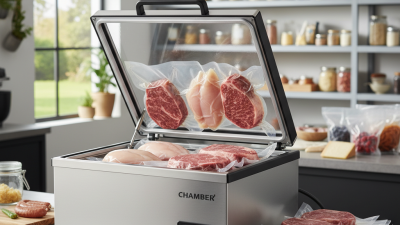
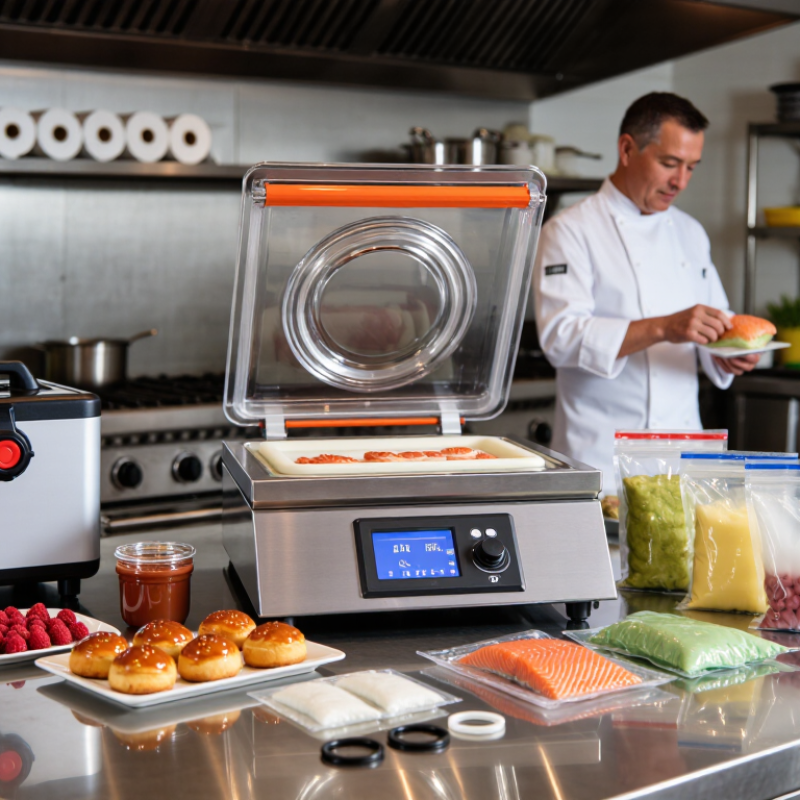
Chamber sealers create a more consistent pressure difference around the entire bag. They suit sauces, marinades, and high-volume portioning. A double-chamber design can improve workflow when staff seal several bags every minute. Choose the chamber by bag size, not guesswork. A 12-inch bag opening is useless if your portions need 16 inches. Continuous-band systems may fit factories, while tabletop units suit restaurants with uneven demand. Grand View Research reported continued growth in the global vacuum packaging market, but market estimates vary by product category and region.
Sealing technology also deserves close inspection. Impulse sealing works well for many standard barrier bags and limits heat exposure. Constant-heat systems handle thicker laminates more evenly. Look for adjustable temperature, dwell time, and pressure controls. Digital sensors help, but they do not replace daily seal checks. I would test a wet sample, a sharp-edged portion, and a fully loaded bag before purchase. Small leaks appear later. That is the uncomfortable part. Evaluate service access, removable seal bars, and cleaning time alongside cycle speed. A faster machine can still lose money when operators avoid using it.
Check Cleaning, Maintenance, Energy Use, and Operating Costs
How to Choose a Commercial Food Vacuum Sealer in 2026?
Cleaning should be tested before sealing speed. Open the chamber, remove the drip tray, and inspect every corner for trapped liquid. A smooth stainless-steel interior usually reduces scrubbing time and sanitation risks. Check whether the sealing bar lifts out without tools. That small detail matters during a busy service. Ask staff to clean a used machine, not a showroom model.
Maintenance costs can quietly exceed the purchase price. Examine the gasket, sealing wire, pump filter, and lid hinges. Confirm replacement intervals and keep essential parts available locally. A clear maintenance log helps operators notice weak seals, unusual noise, or longer vacuum cycles. Do not trust a perfect demonstration. Test several bag sizes with moist and dry foods.
Energy use also affects the real operating cost. Compare power ratings, standby consumption, cycle duration, and daily workload. A lower-wattage unit may cost more if it needs repeated cycles. Measure energy with a plug-in meter during normal production. Record electricity use for one week. The result will be imperfect, but it is more useful than a catalog estimate. Calculate labor, bags, electricity, cleaning supplies, and repairs together. A machine that saves thirty seconds per cycle may still lose value if its parts fail often. Review these figures every few months, because production volume and energy prices change.
Select a Reliable Model Based on Budget, Support, and Compliance
Choosing a commercial food vacuum sealer in 2026 starts with budget, but purchase price is only one cost. USDA Economic Research Service data shows food-away-from-home spending reached about 58.5% of total U.S. food expenditure in 2023. That pressure makes uptime important. A low-cost machine may become expensive after repeated seal-bar repairs, wasted bags, and production delays.
Check pump capacity, seal length, cycle time, and chamber size against your busiest service period. A café sealing 200 small portions needs different equipment than a processor handling large cuts. Ask for written service response times, spare-part availability, operator training, and warranty exclusions. PMMI industry reporting continues to identify labor efficiency and automation as major packaging priorities. Still, automation cannot fix poor cleaning habits. I have seen purchasing teams overlook that detail.
Tips: Test the sealer with your actual bags, moisture levels, and portion sizes. Measure ten cycles. Record failed seals. Review the results before signing.
Compliance should shape the shortlist. The FDA Food Code 2022 treats reduced-oxygen packaging as a controlled process requiring documented procedures, temperature control, and trained handling. Confirm whether the model supports your HACCP plan, sanitation schedule, and local inspection requirements. Look for smooth food-contact surfaces, removable parts, clear controls, and accessible vacuum settings. Digital records can help, but they are not automatically reliable. Verify calibration, password control, and backup procedures. A model with strong documentation and responsive technical support may protect operations better than a faster machine.