How to Choose the Best Food Vacuum Sealer for Your Kitchen Needs
In the contemporary kitchen, efficiency and food preservation are paramount, which is why choosing the best food vacuum sealer can significantly enhance your culinary experience. A food vacuum sealer not only keeps your food fresh for longer periods but also minimizes waste, allowing you to store bulk purchases or leftovers with ease. With numerous models available in the market, navigating through the options can be overwhelming, making it crucial to understand what features to look for to ensure you select the right device for your needs.
When searching for the best food vacuum sealer, consider factors such as sealing capabilities, vacuum strength, and user-friendly designs. Different sealer types cater to various storage needs and budgets, so it is essential to assess your specific requirements—whether for meal prepping, sous vide cooking, or preserving seasonal produce. Additionally, understanding the importance of durability and ease of maintenance can further simplify your decision-making process. By keeping these elements in mind, you'll be well-equipped to choose the best food vacuum sealer that not only fits your kitchen layout but also elevates your food preservation game.

Understanding the Basics of Food Vacuum Sealers and Their Functionality
When considering a food vacuum sealer for your kitchen needs, it's essential to understand the basic functionality of these devices. A food vacuum sealer works by removing air from a plastic pouch containing food, then sealing the bag to prevent air from re-entering. This process creates an airtight environment that helps to preserve food by reducing oxidation and inhibiting the growth of bacteria and mold, which can spoil food. The technology relies on a simple yet effective suction mechanism that extracts air and forms a tight seal, thereby extending the shelf life of various food items.
Different types of food vacuum sealers are available, each designed for specific functions. For instance, chamber vacuum sealers are often used for larger items or liquids, as they can handle moisture better than external models. Conversely, external vacuum sealers are compact and user-friendly, making them suitable for everyday household use. Understanding these distinctions can help you choose the right model based on your food storage habits and the types of items you intend to seal. Moreover, features such as adjustable suction power, built-in bag cutters, and the ability to seal jars or canisters can enhance your user experience, making it easier to achieve optimal food preservation.
How to Choose the Best Food Vacuum Sealer for Your Kitchen Needs
| Feature |
Description |
Importance |
| Seal Type |
Uniform or angled seal for different types of bags. |
High |
| Vacuum Strength |
The power of the vacuum motor. |
Critical |
| Size & Portability |
Dimensions and weight affecting ease of storage and use. |
Moderate |
| User Interface |
Ease of use and control settings. |
High |
| Filtration System |
Prevents debris from entering the vacuum motor. |
Moderate |
| Bag Compatibility |
Types of bags that can be used. |
High |
| Warranty |
Duration and coverage of manufacturer warranty. |
Important |
Identifying Your Kitchen Needs and Preferences for Vacuum Sealing
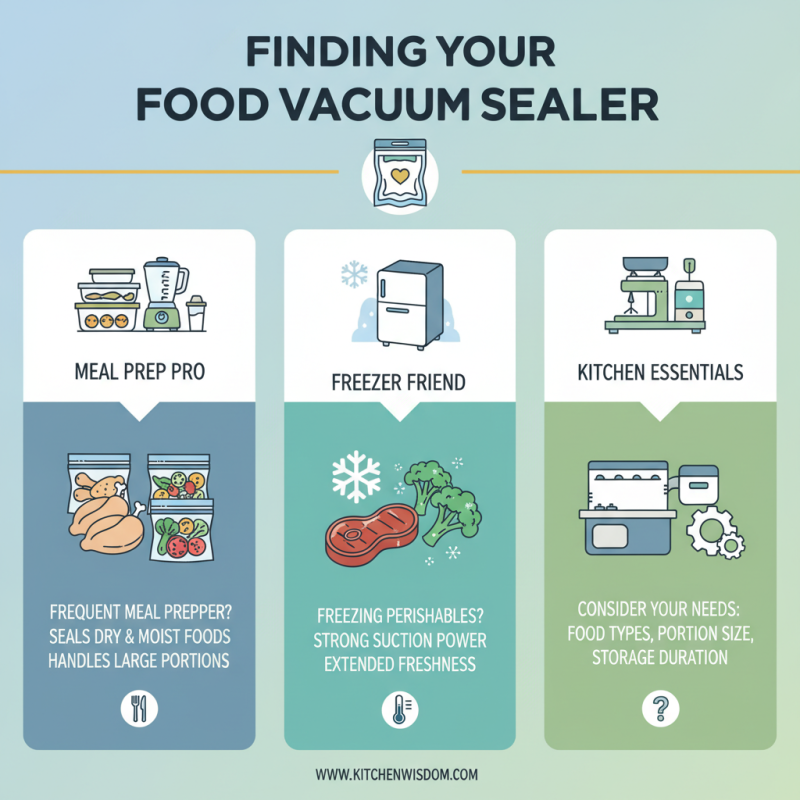
When it comes to choosing the best food vacuum sealer for your kitchen, understanding your specific needs and preferences is paramount. Begin by assessing the types of food you commonly store. If you're a frequent meal prepper, you'll likely need a sealer capable of handling both dry and moist foods, as well as one that can seal larger portions. Consider whether you often freeze perishables, such as meats or vegetables, as this would require a vacuum sealer with a strong suction capability and a reliable sealing time to ensure freshness over an extended period.
Another important aspect to contemplate is the frequency of use. For everyday users, a compact and easy-to-operate model may be most appealing, while occasional users might prefer a more versatile machine with various settings for different food types. Evaluate the available space in your kitchen as well; a model that fits comfortably into your kitchen layout without being cumbersome is crucial for everyday accessibility. Ultimately, identifying your kitchen needs and preferences will guide you towards selecting a vacuum sealer that enhances your food storage practices and complements your cooking style.
Evaluating Different Types of Vacuum Sealers: Pros and Cons
When evaluating different types of vacuum sealers, it's important to consider the various pros and cons associated with each type. The most common types are external vacuum sealers, chamber vacuum sealers, and handheld vacuum sealers. External vacuum sealers are user-friendly and ideal for home kitchens, allowing you to seal bags quickly and efficiently. However, they may struggle with liquids, as they can sometimes lead to messes if too much liquid is sealed in the bag.
Chamber vacuum sealers, on the other hand, are more versatile and capable of sealing a variety of items, including liquids and moist foods. They work by removing air from a sealed chamber, but they tend to be more expensive and require more counter space. Handheld vacuum sealers offer convenience and portability, making them great for quick sealing tasks, but they generally lack the power and consistency of external and chamber models.
Tips: When selecting a vacuum sealer, consider how often you plan to use it and the types of food you'll be sealing. If you frequently store liquids or marinated foods, a chamber vacuumer might be your best choice. Additionally, think about the size and storage capabilities of the vacuum sealer to ensure it fits well within your kitchen space. Always look for features that match your specific needs, such as bag compatibility and sealing speed.
Comparison of Different Types of Food Vacuum Sealers
Key Features to Look for in a Vacuum Sealer for Optimal Performance
When selecting the best food vacuum sealer for your kitchen, understanding the key features that contribute to optimal performance is essential. One of the foremost aspects is the vacuum strength, typically measured in inches of mercury (inHg). A strong vacuum (around 25 inHg or higher) effectively removes air from bags, preventing oxidation and freezer burn, thus prolonging food freshness. Additionally, consider models equipped with adjustable suction settings. These allow for gentle sealing of delicate items like fruits or sandwiches, ensuring they maintain their shape and texture post-sealing.
Another significant feature to look for is the sealing element's quality. Many premium vacuum sealers come with a double seal function that reinforces the integrity of the bag seal, providing an extra layer of protection against leaks. This is particularly important when storing liquids or moist foods. Furthermore, the ability to seal different types and sizes of bags, including custom-sized bags, is crucial for versatility in your kitchen.
**Tip:** When choosing a vacuum sealer, it's advisable to look for one with a built-in cutter or the option to use roll bags. This can greatly enhance convenience and help reduce waste, as you can cut the precise length needed for each sealing task.
**Tip:** Regular maintenance, such as cleaning the sealing strip and ensuring the vacuum chamber is free from debris, can significantly extend the lifespan of your vacuum sealer. Proper care can improve seal quality and reduce the risk of losing the vacuum seal over time.
Budget Considerations: Finding Quality Sealers Within Your Price Range
When choosing a food vacuum sealer, budget considerations play a crucial role in ensuring you find a quality product that meets your kitchen needs without breaking the bank. It’s essential to determine how much you are willing to invest before diving into the myriad of options available. Setting a clear budget helps narrow down your choices and allows you to focus on features that truly matter to you, such as sealing speed, ease of use, and durability. Many affordable models offer excellent performance and can effectively preserve your food while remaining gentle on your wallet.
While exploring vacuum sealers within your price range, it's wise to compare the features offered by each model. Look for essential qualities like sealing efficiency, bag compatibility, and additional functionalities such as vacuum marinating. Reading customer reviews can provide valuable insights into the long-term performance of budget-friendly options. By carefully evaluating both the price and the features, you can find a food vacuum sealer that not only fits your financial limits but also meets your culinary needs, ensuring that your food stays fresher for longer without unnecessary expenditure.