

Blog
What Is an Abrasive Flap Disc Used For?
What Is an Abrasive Flap Disc Used For? This question matters wherever metal edges, welds, and rough surfaces demand controlled finishing. An Abrasive Flap Disc combines overlapping abrasive cloth flaps with a rigid backing plate. It removes material progressively, rather than cutting aggressively like a grinding wheel. On a steel handrail, it can flatten a weld bead, soften a sharp corner, and prepare the surface for paint.
Industry demand reflects this practical role. Grand View Research’s Industrial Abrasives Market Report estimates the global market reached approximately USD 46.4 billion in 2023, with continued growth expected through 2030. Fortune Business Insights also identifies metal fabrication, automotive production, and construction as major abrasive-consuming sectors. These reports do not isolate every flap disc application, but they show the scale behind surface preparation and finishing work.
Steve Boudreau, a senior application engineer associated with Norton Abrasives, describes the principle simply: “Abrasive selection should match the material, finish, and pressure.” That guidance is easy to overlook. Too much pressure can load the disc, generate heat, and shorten its life. Too little pressure may leave scratches and uneven blending. Grit choice matters too. Coarse zirconia flaps remove welds quickly, while finer ceramic or aluminum oxide flaps create a smoother finish. Results vary.
Abrasive Flap Disc performance depends on speed, angle, operator control, and workpiece condition. It is not a universal solution. The best choice begins with the surface, not the catalogue.
What Is an Abrasive Flap Disc?
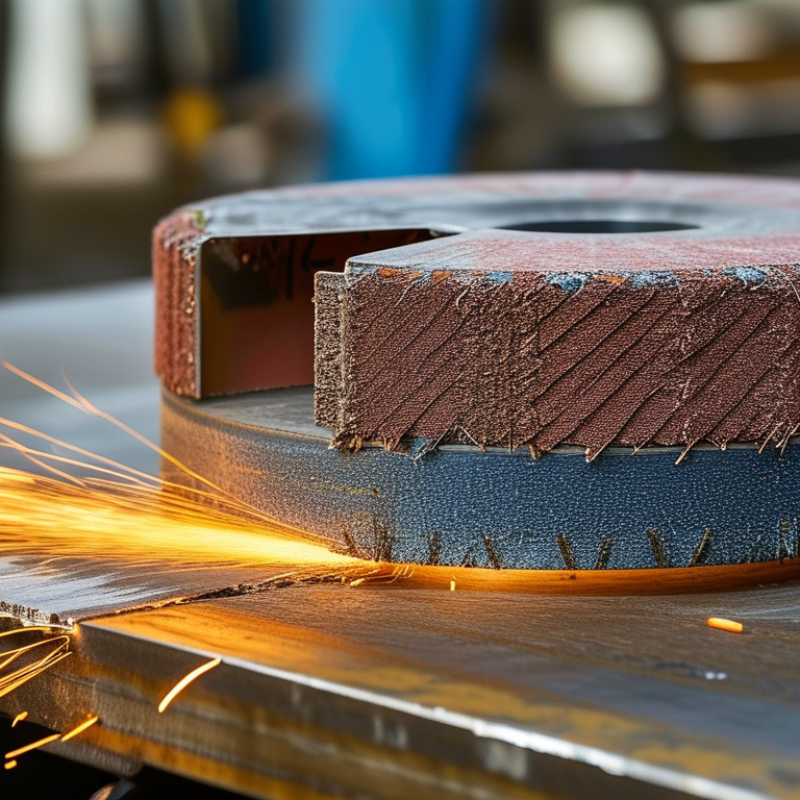
An abrasive flap disc is a grinding and finishing tool made from overlapping abrasive cloth flaps. These flaps attach to a firm backing plate and form a circular disc for an angle grinder. Unlike a solid grinding wheel, the flaps gradually wear away and expose fresh abrasive material. This design can provide smoother, more controlled cutting action.
Workers use abrasive flap discs to remove weld spatter, rust, paint, burrs, and sharp edges from metal surfaces. They can also blend welds and prepare steel for coating. Different abrasive grits control the result. Coarse grits remove material quickly, while finer grits leave a cleaner finish. The disc still creates heat, however. Pressing too hard may discolor thin sheet metal or damage a finished edge. A flap disc is not a magic solution for every surface.
Tips: Match the disc grit to the task and check its rated speed before use. Hold the grinder at a moderate angle, using light, even pressure. Wear eye, hearing, and suitable hand protection. Inspect the flaps and backing plate for damage. I would not skip this check, even during a quick repair. Shortcuts often create uneven results.
What Is an Abrasive Flap Disc Used For?
Abrasive flap discs are used for weld blending, rust and paint removal, deburring, edge rounding, and surface finishing on materials such as steel and stainless steel. The chart shows typical starting grit choices: lower grits remove material faster, while higher grits produce a smoother finish. Actual grit selection depends on the material, disc type, and required surface condition.
How Does an Abrasive Flap Disc Work?
An abrasive flap disc works through overlapping abrasive-coated cloth flaps fixed around a rigid backing plate. As the disc rotates, each flap contacts the workpiece at a slight angle. The exposed abrasive grains cut small metal particles rather than simply rubbing the surface. This action removes welds, rust, paint, burrs, and uneven edges.
The flaps also create a controlled cushioning effect. They flex under pressure, helping the disc follow curved surfaces and reduce deep scratches. As outer grains wear away, fresh grains become exposed. This self-renewing action keeps cutting performance more consistent than a solid grinding wheel.
However, excessive pressure can flatten the flaps, increase heat, and shorten service life. The process is not perfectly uniform.
A practical operator usually holds the disc around 5 to 15 degrees against the surface, while following the disc’s safety instructions. A shallow angle supports smoother stock removal. A steeper angle may concentrate heat and cause premature wear. Grand View Research estimated the global abrasives market at approximately USD 40 billion in 2023, with continued growth expected through 2030. That market data reflects broad demand for controlled surface finishing, not flap discs alone. FEPA guidance also emphasizes correct disc selection, machine compatibility, and inspection before use. Small details matter. A worn backing plate, excessive force, or poor storage can change how the flaps behave.
What Materials Can It Grind, Polish, or Deburr?
What Is an Abrasive Flap Disc Used For?
An abrasive flap disc can grind, blend, polish, and deburr many metal surfaces. Carbon steel is usually the easiest material to work. It removes weld beads, sharp edges, mill scale, and light rust efficiently. Stainless steel needs a clean disc to prevent cross-contamination. Aluminum is softer and can load the abrasive quickly. Cast iron responds well, but excessive pressure may create deep scratches.
The abrasive type changes the result. Aluminum oxide suits general steel grinding. Zirconia cuts harder alloys and lasts longer under heavier pressure. Ceramic abrasive supports fast stock removal, especially on welds. Silicon carbide can produce a finer finish on some non-ferrous metals and painted surfaces. A flap disc mainly creates a satin finish, not a mirror polish. That distinction is easy to miss. A 2024 Grand View Research market analysis projects roughly 5% annual growth for the global abrasives market through 2030, reflecting wider use across metal fabrication and maintenance. Still, market growth does not guarantee better results. Technique matters more than the label.
Tips: Match the disc to the material and grit. Use lower pressure on aluminum and stainless steel. Keep the disc moving to avoid heat marks. FEPA safety guidance emphasizes checking the disc, guarding the grinder, and staying below its rated speed. Wear eye, face, hearing, and hand protection. Test on scrap first. I sometimes find a finer grit improves the finish, but it removes material much more slowly.
What Is an Abrasive Flap Disc Used For? - What Materials Can It Grind, Polish, or Deburr?
| Material | Common Applications | Recommended Abrasive | Typical Grit Range | Suitable Operations | Important Considerations |
|---|---|---|---|---|---|
| Mild Steel | Weld blending, rust removal, edge preparation, surface leveling | Aluminum oxide or zirconia alumina | 24–80 | Grinding, stock removal, deburring, blending | Use coarse grits for heavy welds and finer grits for a smoother blended finish. |
| Stainless Steel | Weld cleanup, scratch removal, blending, finishing | Zirconia alumina or ceramic alumina | 36–120 | Grinding, deburring, blending, satin finishing | Avoid cross-contamination from discs previously used on carbon steel. |
| Cast Iron | Flash removal, casting cleanup, surface correction | Aluminum oxide or ceramic alumina | 24–60 | Heavy grinding, edge dressing, deburring | Cast iron dust can be substantial; use suitable extraction and respiratory protection. |
| Aluminum | Weld leveling, edge smoothing, burr removal | Non-loading aluminum-oxide or specialty non-ferrous abrasive | 36–120 | Grinding, blending, deburring, light polishing | Use an abrasive designed to resist loading; excessive pressure can smear soft aluminum. |
| Brass and Copper | Burr removal, edge refinement, surface preparation | Fine aluminum oxide or non-woven abrasive | 60–180 | Deburring, blending, light polishing | Use light pressure to prevent gouging and heat buildup on softer metals. |
| Painted or Coated Metal | Coating removal, surface preparation, repair-area cleanup | Coarse aluminum oxide or abrasive-cleaning disc | 24–60 | Coating removal, roughening, localized cleaning | Check whether the coating contains hazardous substances before sanding. |
| Wood | Shaping, edge rounding, material removal, rustic finishing | Aluminum oxide or specialized wood abrasive | 40–120 | Shaping, grinding, smoothing | Use only discs rated for wood and the specific tool; control sparks and dust carefully. |
| Plastic and Composite Materials | Trimming, edge finishing, flash removal | Fine abrasive or non-woven abrasive | 80–180 | Deburring, smoothing, light blending | Low pressure and intermittent contact help prevent melting or heat damage. |
| Stone and Masonry | Edge shaping, minor surface correction, mortar residue removal | Diamond abrasive | Coarse to fine, application-dependent | Grinding, shaping, light surface finishing | Standard resin-cloth flap discs are generally intended for metal; use a disc specifically rated for masonry. |
What Are the Main Applications of Flap Discs?
Abrasive flap discs are mainly used for weld blending, deburring, edge rounding, and surface preparation. Their overlapping abrasive flaps remove metal progressively, leaving fewer deep scratches than many hard grinding wheels. In fabrication shops, an operator may flatten a weld bead, smooth a sharp corner, and prepare bare steel for coating with one disc. The work feels more controlled.
They suit carbon steel, stainless steel, and aluminum when the abrasive type and grit match the material. Coarse grits remove weld reinforcement quickly. Medium grits refine grinding marks. Fine grits help create a cleaner finish before painting or polishing. Flap discs also remove light rust, scale, and old coating. They are not cutting wheels. That distinction matters.
A 2024 MarketsandMarkets assessment valued the global abrasives market at about USD 45.6 billion in 2023, with continued growth expected through 2028. This broad figure includes many abrasive products, so it does not measure flap-disc use directly. Still, it reflects strong demand across metal fabrication, construction, and maintenance. On real jobs, disc life varies sharply with pressure, angle, material, and operator technique. I have found that excessive pressure removes flaps faster, not necessarily metal faster. Use the guard, check the disc’s rated speed, and keep the tool moving. Small mistakes remain expensive.
How to Choose and Use the Right Flap Disc Safely?
An abrasive flap disc removes surface material while leaving a smoother finish than many grinding wheels. It can clean welds, blend edges, remove rust, and prepare steel for painting. The disc uses overlapping abrasive flaps, which wear gradually and expose fresh cutting surfaces. This design helps maintain a consistent finish during ordinary fabrication and repair work.
Choosing the right disc starts with the workpiece. Use a disc rated for the specific metal, such as carbon steel, stainless steel, or aluminum. Select the grit according to the task. Coarse grits remove welds quickly, while finer grits refine scratches. Check the disc diameter, arbor size, and maximum RPM against the grinder’s specifications. Never rely on appearance alone. I once assumed two similar discs had identical ratings, but that shortcut showed poor judgment.
Inspect the disc for torn flaps, cracks, moisture damage, or a distorted backing. Wear eye protection, hearing protection, gloves, suitable clothing, and a properly fitted face shield when needed. Keep the grinder guard installed. Hold the tool firmly and work at a shallow angle, usually around 10 to 15 degrees. Use light, steady pressure instead of forcing the abrasive into the metal. Avoid using the disc’s edge or side unless its design specifically permits it. Keep sparks away from people, flammable materials, and finished surfaces. Let the disc stop completely before setting the tool down. Mistakes happen. Rechecking the label and work area takes less time than repairing preventable damage.

