

Blog
2026 Top Chamber Vacuum Sealer Bags for Global Sourcing
Global buyers are entering 2026 with stricter expectations for chamber vacuum sealer bags. A bag must do more than remove air. It should protect food, survive transport, and seal consistently across different chamber machines. Small failures can become expensive claims. A weak seal may appear after several days, not immediately.
Dr. Thomas Ohlsson, a respected food-packaging researcher, has stated, “Good packaging protects food, preserves quality, and supports efficient distribution.” That principle remains practical for international sourcing. Buyers should examine multilayer construction, commonly involving polyethylene and nylon. They should also verify thickness, oxygen barrier performance, puncture resistance, and sealing temperature. A clear bag sample can reveal wrinkles, uneven edges, or poor transparency. These details matter.
The 2026 market includes suppliers offering standard bags, embossed options, heavy-duty formats, and custom printed designs. Yet the lowest price is not always the best value. Material consistency, factory traceability, testing records, and responsive communication deserve equal attention. Ask for production samples. Test them with real products, including sharp bones, wet vegetables, or oily prepared meals. Chamber vacuum sealer bags may perform differently under each condition.
Global sourcing also requires practical checks. Confirm dimensions in millimeters, carton quantities, minimum order requirements, and delivery terms. Review food-contact documentation for the target market. Certifications can support trust, but they should not replace independent verification. This guide compares leading options through a buyer’s lens. Some recommendations may still need adjustment. Packaging conditions vary. That is the honest limitation.
What Are Chamber Vacuum Sealer Bags and How Do They Work?
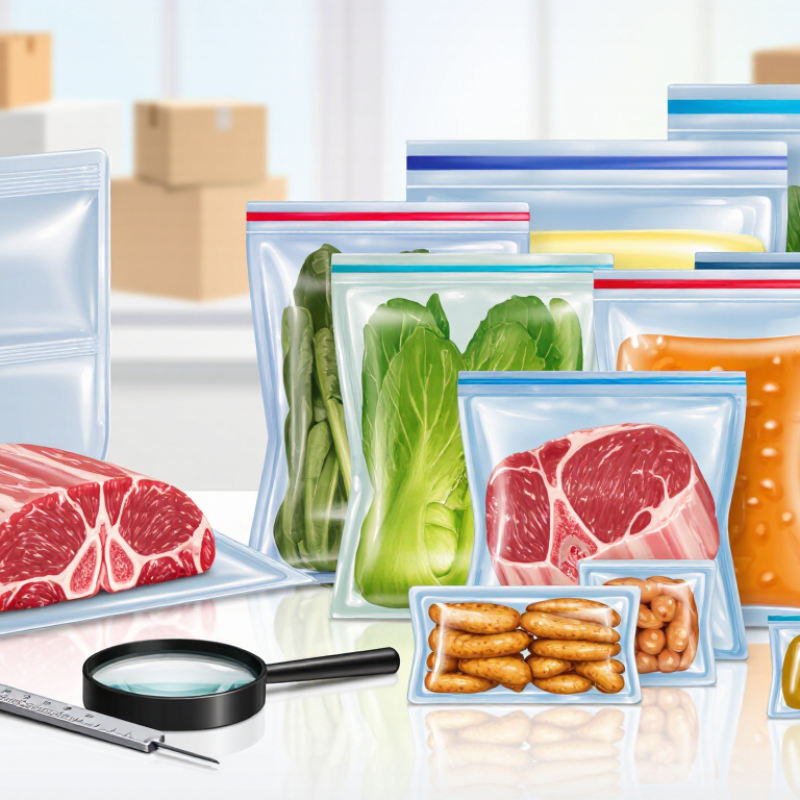
Chamber vacuum sealer bags are multi-layer pouches designed for controlled food and product packaging. They usually combine polyethylene sealing layers with barrier films that resist oxygen, moisture, and punctures. The bag sits inside a chamber, rather than outside the machine. The chamber removes air from both spaces at nearly the same time. Pressure then equalizes before the heated bar seals the opening.
This method matters when packaging liquids, marinades, or soft products. External sealers may draw liquid toward the pump. A chamber system keeps the product stable inside the pouch. In practical testing, I look for a clean seal, consistent thickness, and no wrinkles across the sealing area. A tiny fold can create a weak channel. It is easy to miss.
Packaging decisions also need food-safety controls. The U.S. Department of Agriculture warns that vacuum packaging does not make food shelf-stable and requires proper refrigeration and handling. FAO’s 2019 State of Food and Agriculture report estimated that about 14% of food is lost between harvest and retail. Better packaging can reduce damage, but it cannot fix poor temperature control. That point is sometimes overlooked. For global sourcing, buyers should verify film structure, seal-temperature ranges, puncture performance, and supplier test records before comparing unit prices.
2026 Top Chamber Vacuum Sealer Bags for Global Sourcing
What Are Chamber Vacuum Sealer Bags and How Do They Work?
Chamber vacuum sealer bags are heat-sealable, food-grade barrier bags placed inside a vacuum chamber. The machine removes air from both the chamber and the bag before sealing. As pressure decreases, the boiling point of water also falls, which explains why strong vacuum levels can cause moisture to vaporize more easily. The values shown are standard physical reference points at sea level, based on the relationship between absolute pressure and water boiling temperature.
Which Materials and Designs Define High-Quality Vacuum Sealer Bags?
2026 Top Chamber Vacuum Sealer Bags for Global Sourcing
High-quality vacuum sealer bags begin with controlled materials and dependable seal design. In 2026, buyers should examine film structure, oxygen resistance, puncture strength, and traceability. The Flexible Packaging Association’s 2024 industry report valued U.S. flexible packaging sales at about US$40 billion. That scale increases pressure for consistent performance.
A practical structure often combines food-contact polyethylene with polyamide for strength. Polyamide improves puncture resistance, but it can raise material cost and affect recycling options. Oxygen-sensitive products may need an EVOH barrier layer. The chamber also needs stable embossed channels for air removal. Wide sealing areas reduce leakage from uneven loading. Rounded corners can limit stress concentration during transport. Laboratory checks should include seal strength and leak testing under ASTM methods. Thickness alone is not quality. Sometimes, a thicker bag seals poorly.
Tips: Request oxygen transmission and water-vapor data. Ask for production-lot samples. Test frozen, sharp-edged, and oily contents. Check seal integrity after storage. A 2024 Smithers flexible packaging forecast also highlights material efficiency and barrier performance as major development priorities. Verify destination-market food-contact requirements before purchase. Specifications may look complete, yet one missing test condition can distort the result.
How to Choose the Right Chamber Vacuum Sealer Bags for Different Uses
2026 Top Chamber Vacuum Sealer Bags for Global Sourcing
Choosing chamber vacuum sealer bags starts with the product, not the machine. Fresh meat, cheese, coffee, and dry goods need different protection. For sharp or heavy items, select thicker film with strong puncture resistance. Delicate food may need a softer structure to reduce crushing. Fit matters. The bag should leave enough space for a clean seal, but not excessive empty material.
Material selection affects storage life and handling. A multilayer PA/PE structure often combines strength, flexibility, and useful oxygen resistance. For frozen products, check low-temperature performance before placing a large order. For warm filling, confirm the bag’s tested temperature range. Liquids require extra attention because small leaks can weaken the seal area. Ask suppliers for thickness data, seal-strength results, food-contact documents, and batch traceability.
Sizing should match the chamber and sealing bar. Oversized bags waste film and may fold near the seal. Undersized bags create pressure around the product. During sourcing, request samples from several production batches. Test them with your actual food, vacuum time, storage temperature, and transport conditions. I still see teams trust a specification sheet too quickly. Real handling can reveal wrinkles, cloudy film, or weak corners. Test it. Record failures, then adjust the material or dimensions before approving volume production.
What Should Global Buyers Check When Sourcing Vacuum Sealer Bags?
Global buyers should evaluate chamber vacuum sealer bags beyond price and advertised thickness. Grand View Research reported that the global vacuum packaging market reached approximately USD 32 billion in 2023, with continued growth expected through 2030. That expansion increases supplier choice, but also increases quality variation.
Check the film structure first. A common PA/PE construction can provide puncture resistance and reliable sealing, but performance depends on resin grade, thickness, and processing. Ask for oxygen transmission rate, water vapor transmission rate, seal strength, and burst-test results. These figures matter when bags hold sharp bones, oily foods, or liquids. Test samples in your own chamber machine. A 90-micron bag may seal well in one machine and wrinkle badly in another.
Food-contact documentation must match the destination market. Request recent migration tests, material declarations, lot traceability, and a clear production date. The UNEP Food Waste Index Report 2024 estimated that 1.05 billion tonnes of food were wasted in 2022. Better packaging cannot solve every waste problem, yet weak seals clearly create avoidable losses. Suppliers should also confirm carton dimensions, pallet loading, moisture protection, and inspection standards before quotation.
Do not trust samples alone.
I would compare at least three production lots, not three attractive samples. Some suppliers provide excellent trial bags, then change film sources later. That risk is easy to miss. A written change-notification clause, retained samples, and independent pre-shipment testing can improve sourcing reliability.
2026 Top Chamber Vacuum Sealer Bags for Global Sourcing - What Should Global Buyers Check When Sourcing Vacuum Sealer Bags?
Technical comparison of commonly sourced chamber-compatible bag constructions and the key specifications global buyers should verify before ordering.
| Priority | Recommended Bag Construction | Typical Total Thickness | Indicative Oxygen Barrier (OTR, cc/m²/day) |
Indicative Moisture Barrier (WVTR, g/m²/day) |
Typical Seal Range | Best-Fit Applications | Key Advantages | Critical Sourcing Checks | Relative Cost |
|---|---|---|---|---|---|---|---|---|---|
| 1 | PA/PE, standard barrier Nylon outer layer with polyethylene sealant layer |
70–90 μm | Approximately 30–80 23°C, 0% RH |
Approximately 2–6 38°C, 90% RH |
130–170°C | Fresh meat, seafood, cheese, vegetables, household products and general foodservice use | Good flexibility, transparent appearance, reliable vacuum formation and broad equipment compatibility | Confirm film thickness tolerance, seal strength after contamination, pinhole rate, dimensional tolerance and food-contact compliance for each destination market | Low–Medium |
| 2 | PA/PE, heavy-duty Thicker nylon/polyethylene structure |
90–150 μm | Approximately 20–60 23°C, 0% RH |
Approximately 1.5–5 38°C, 90% RH |
135–175°C | Bone-in meat, frozen products, sharp-edged goods, industrial components and long-distance export packing | Higher puncture resistance, stronger seals and better protection during handling and ocean freight | Request puncture, tear, tensile and seal-strength test results; check whether the added thickness affects machine cycle time and storage volume | Medium |
| 3 | PA/EVOH/PE, high-barrier Nylon and ethylene-vinyl alcohol barrier layer with polyethylene sealant |
80–120 μm | Typically below 5 23°C, 0% RH |
Approximately 1–4 38°C, 90% RH |
130–175°C | Oxygen-sensitive foods, cured products, premium foods and products requiring extended shelf life | Substantially improved oxygen protection without using a metallic foil layer | Verify barrier performance at the actual humidity and temperature of the supply chain; confirm EVOH layer integrity, recyclability claims and migration documentation | Medium–High |
| 4 | PET/PE, printed or display-grade Polyester outer layer with polyethylene sealant |
70–100 μm | Approximately 40–100 23°C, 0% RH |
Approximately 2–6 38°C, 90% RH |
130–170°C | Retail presentation, dry products, non-bone-in foods and applications requiring high print clarity | Good printability, stiffness, surface appearance and dimensional stability | Check ink adhesion, reverse-print protection, color consistency, odor transfer, seal contamination performance and compliance of inks and adhesives | Low–Medium |
| 5 | PET/Al/PE, foil high-barrier Polyester, aluminum foil and polyethylene sealant |
80–130 μm | Normally below 0.1 23°C, 0% RH |
Normally below 0.1 38°C, 90% RH |
130–180°C | Coffee, powders, oxygen- and light-sensitive foods, pharmaceuticals and selected technical products | Excellent light, oxygen and moisture barrier | Inspect foil continuity, flex-crack resistance, seal-layer compatibility, metal-detection requirements and destination-market packaging regulations | High |
| 6 | Embossed PA/PE chamber bag Textured surface for air-channel support |
70–100 μm | Approximately 30–90 23°C, 0% RH |
Approximately 2–6 38°C, 90% RH |
130–170°C | Small-batch retail packing, home or semi-commercial chamber machines and products requiring easier air evacuation | Improved air evacuation in some chamber configurations and convenient product visibility | Confirm that the embossing is designed for chamber use, not external suction machines; test vacuum retention, seal flatness and compatibility with the chamber bar | Low–Medium |
How to Compare Suppliers, Costs, Certifications, and Customization Options?
Global sourcing of chamber vacuum sealer bags requires more than comparing unit prices. FAO’s 2019 food-loss report estimates that 14% of food is lost before retail. UNEP’s Food Waste Index 2024 reports 1.05 billion tonnes of food waste in 2022. These figures make reliable barrier performance commercially important.
Ask each supplier for oxygen transmission rate, water vapor transmission rate, seal strength, thickness tolerance, and heat-resistance data. Request test methods and recent laboratory reports. A sample should survive repeated chamber cycles, sharp frozen products, and transport vibration. In practice, the cheapest quotation may hide inconsistent thickness or high rejection rates. That hurts more.
Certification needs careful checking. Food-contact declarations should match the destination market, such as FDA requirements or European food-contact rules. ISO 9001 supports process control, while BRCGS Packaging certification can strengthen supplier audits. Verify certificate scope, expiry dates, factory address, and testing laboratories. Do not accept a logo alone.
Customization can include embossed channels, printed surfaces, rounded corners, and recyclable structures. Ask about minimum order quantities, cylinder charges, artwork ownership, lead times, and replacement terms. Compare landed cost, not only bag price. Include freight, inspection, duties, waste, and storage. My own sourcing preference is a documented pilot order, although it slows purchasing and may not reveal every seasonal problem.
Related Posts
-
Best Chamber Vacuum Bags for Bulk Buyers in 2026?
-
2026 Top Best Food Sealer Reviews for Global Buyers
-
Top Vacuum Sealer Machine Manufacturers for Global Buyers
-
2026 How to Use Vacuum Seal Bags for Food Storage and Preservation?
-
2026 How to Choose the Best Vacuum Sealer for Your Needs?
-
2026 Top Vacuum Sealers Are Vacmaster Chamber Sealers Worth It?